China’s Bipv Solar Facade Glass industry combines photovoltaic engineering with architectural glass production. Manufacturers now develop panels for curtain walls, skylights, atriums, and ventilated façades. These products must generate electricity while protecting occupants from wind, rain, heat, and glare. The best suppliers understand both requirements. They do not treat solar modules as ordinary building materials. Their production records should show tested lamination, controlled glass thickness, stable cell alignment, and documented quality inspections. Factory experience matters here.
This guide examines leading Chinese manufacturers through practical and verifiable criteria. These include production capacity, project experience, customization options, electrical performance, and after-sales support. It also considers certifications, fire-related testing, structural documentation, and resistance to moisture and temperature changes. A reliable supplier should explain power output, transparency, color options, cable routing, and replacement procedures clearly. Sample panels deserve close inspection. Look for clean edges, consistent spacing, firm junction boxes, and readable test reports. Small details matter.
A polished brochure is not proof. Some supplier claims need independent verification. Buyers should request references from completed commercial or public projects. Site photographs can help, but they may not reveal long-term performance. No manufacturer is perfect. Delays, design changes, and communication gaps can still happen. This overview therefore focuses on evidence, technical competence, and transparent cooperation. It aims to help developers, architects, and façade contractors compare Chinese manufacturers with greater confidence. The right choice should balance appearance, energy yield, safety, durability, and total project cost.
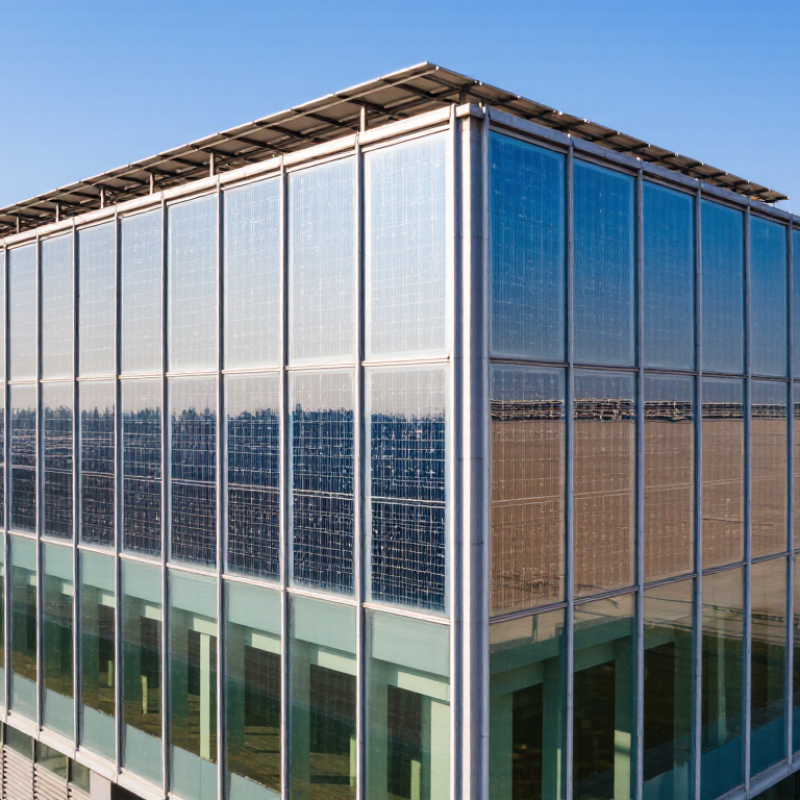
BIPV solar facade glass turns part of a building’s exterior into an electricity-generating surface. Unlike conventional panels mounted over a wall, it can serve as both facade material and power system. Solar cells may sit between glass layers, with spacing that controls daylight and privacy. Some designs are opaque; others allow filtered views.
Its uses include office towers, transit halls, schools, and renovated commercial buildings. On a south-facing facade, glass can capture useful sunlight while reducing direct glare. Vertical surfaces usually receive less energy than well-tilted rooftop panels, though they can contribute where roof space is limited. Every elevation behaves differently. Nearby buildings, trees, and window orientation affect output, so a site assessment matters more than a brochure estimate.
Good specification balances energy yield with appearance, safety, insulation, and maintenance access. Engineers need to coordinate glass dimensions, wiring routes, inverters, fire performance, and facade drainage before construction. Small details count: cable access behind a mullion can prevent difficult repairs later. Still, BIPV is not a perfect substitute for ordinary glazing or rooftop solar. Costs and output can disappoint when shading is underestimated. That deserves an honest conversation early. A mock-up can help teams judge color, reflections, and indoor brightness before ordering a full facade.
Top BIPV Solar Facade Glass Manufacturers in China
China’s leading BIPV facade glass manufacturers combine photovoltaic engineering with architectural glass production. Experienced teams assess building orientation, wind pressure, shading, fire safety, and maintenance access before selecting a module structure. They may use crystalline silicon or thin-film cells, depending on transparency and design needs. Low-iron glass improves daylight transmission. Laminated construction supports safety and weather resistance. Details matter.
Modern factories commonly integrate glass cutting, tempering, coating, cell assembly, and high-pressure lamination. Automated production improves dimensional consistency across large facade panels. Electrical testing checks voltage, current, insulation, and cell defects. Electroluminescence inspection can reveal hidden cracks before shipment. Reliable manufacturers also maintain batch records, material certificates, and controlled storage conditions. Testing is not optional.
Manufacturing flexibility is equally important. Projects may require custom panel sizes, colored glass, varied transparency, embedded junction boxes, or concealed cable routes. Factory-made mock-ups help verify appearance, drainage, sealant joints, and installation tolerances. However, peak power ratings can create an incomplete picture. Annual output depends on orientation, temperature, dirt, and nearby shadows. Some specifications still need closer review. A practical buyer should request tested samples, production records, warranty terms, and performance data from comparable facade projects.
Leading BIPV Solar Facade Glass Manufacturers in China combine photovoltaic engineering with architectural glass production. Their solutions can turn curtain walls, skylights, and entrance canopies into energy-generating surfaces. Experienced manufacturers usually support design development, glass configuration, electrical planning, and project documentation. This wider service matters because facade performance depends on more than cell efficiency.
Reliable suppliers should provide tested data for power output, thermal performance, light transmission, and safety. Buyers should also review factory quality systems, production capacity, lamination methods, and traceability records. In practice, experienced teams often recommend customized module sizes for complex elevations. They may also adjust cell spacing to balance daylight and visual design. A small detail can affect installation speed.
Tips: Request samples before mass production. Check color consistency under different lighting conditions. Confirm fire, wind-load, impact, and weather-resistance requirements with qualified professionals. Ask for installation drawings and maintenance guidance. Do not judge a manufacturer by price alone.
No facade is perfect. Even a carefully designed system may reveal glare, wiring, or drainage issues during construction. This is why site communication remains essential. Leading Chinese manufacturers should respond clearly, document changes, and accept technical review. Buyers can improve reliability by comparing several proposals, visiting production facilities when possible, and verifying independent test reports before signing a contract.
Choosing a BIPV solar facade glass manufacturer requires more than comparing quoted prices. Examine the glass build-up, cell layout, visible-light transmission, color consistency, and output data. Ask for sample panels and review them in daylight and shade. Small differences can matter. Check whether stated performance comes from independent test reports, and confirm that certificates apply to the exact product configuration being offered. A certificate for one glass thickness may not cover another.
Project experience should be relevant to your building, not just impressive in photographs. Request case details such as facade area, mounting method, climate conditions, and commissioning results. Ask how the supplier handled wiring routes, edge sealing, replacement access, and coordination with the curtain-wall contractor. These details can reveal gaps early. Review quality controls, traceability, warranty terms, and available technical support. Requirements vary by project location, so verify applicable standards with the design team and local authorities. I would not treat a long project list as proof of reliable performance; references and documented outcomes are more useful.
| Manufacturer Profile | Primary BIPV Facade Product | Module Construction | Typical Power Range | Visible-Light Design Options | Relevant Certifications and Standards | Facade Integration Capability | Typical Project Experience | Quality and Traceability Indicators | Best-Fit Application |
|---|---|---|---|---|---|---|---|---|---|
| Profile A | Opaque crystalline-silicon solar curtain-wall glass | Tempered laminated safety glass with embedded silicon cells and weather-resistant encapsulant | Approximately 150–220 W/m², depending on cell layout and glass configuration | Black Dark grey Custom cell spacing | IEC 61215 and IEC 61730 testing commonly specified for crystalline-silicon modules; architectural safety glass typically designed to applicable EN or ASTM requirements | Unitized and stick curtain-wall coordination; concealed or visible framing options | Commercial offices, institutional buildings, transport-related facades, and high-rise envelopes | EL testing, flash testing, insulation testing, glass tempering records, and batch-level serial tracking | High-output opaque spandrel zones and ventilated curtain walls |
| Profile B | Semi-transparent crystalline-silicon BIPV glazing | Double-glazed or laminated insulated glass with patterned cell arrangement | Approximately 80–180 W/m², subject to transparency and cell coverage | 10–40% transparency Regular patterns Custom color options | IEC 61215 and IEC 61730 for module performance and safety; ISO 9001 is commonly used for manufacturing quality management | Integration with mullions, transoms, skylight systems, sunshades, and atrium envelopes | Glass atriums, office lobbies, pedestrian canopies, education buildings, and airport-style structures | Optical inspection, lamination monitoring, thermal-cycle testing, and dimensional inspection | Daylighting areas where solar generation and visual transparency must be balanced |
| Profile C | Colored or printed BIPV facade glass | Glass-glass photovoltaic module using ceramic frit, patterned coating, or selective visual masking | Approximately 100–190 W/m², depending on color density and active area | Terracotta tones Grey White patterns Custom graphics | Project documentation may include IEC 61215, IEC 61730, IEC 61701, CE-related declarations, and applicable building-glass compliance reports | Suitable for rainscreen systems, ventilated facades, spandrels, and architecturally patterned elevations | Retail complexes, cultural buildings, mixed-use developments, and design-led commercial facades | Color consistency control, coating adhesion checks, accelerated aging, moisture resistance, and power sorting | Projects requiring architectural color coordination and reduced visual prominence of photovoltaic cells |
| Profile D | Large-format double-glass BIPV curtain-wall panels | Insulating glass unit or laminated glass assembly with framed or frameless mounting interfaces | Approximately 160–250 W/m² for low-transparency configurations | Low-transparency Cell-string layouts Large-format panels | IEC 61215 and IEC 61730 are typical module benchmarks; project-specific wind-load, impact, fire, thermal, and facade-performance testing is required | Engineering support for structural loads, drainage, cable routing, junction-box access, and facade tolerances | High-rise office towers, industrial headquarters, convention centers, and large commercial developments | Factory acceptance testing, mechanical-load verification, thermal performance checks, and installation drawings | Large facade areas where standardized panel dimensions and high annual energy yield are priorities |
| Profile E | Custom-format BIPV glass for windows, balustrades, and sun-control elements | Laminated safety glass with customized cell arrangement, cable position, and edge treatment | Approximately 60–170 W/m², depending on transparency, orientation, and usable area | High transparency Variable cell pitch Custom dimensions | Product testing generally combines IEC photovoltaic standards with local or project-specific safety-glazing, impact, and structural requirements | Balustrades, balcony screens, external louvers, windows, skylights, and architectural shading devices | Residential towers, hotels, public buildings, terraces, and retrofit facade upgrades | Edge-seal inspection, insulation resistance, impact testing, dimensional control, and installation mock-ups | Distributed-generation elements where conventional facade zones are limited |

Selecting a BIPV solar facade glass manufacturer in China requires more than comparing panel prices. Start with project experience. Ask for completed facade installations, climate conditions, system sizes, and performance records. Factory photographs are useful, but independently verifiable references are stronger. Data matters.
Technical capability should match the building design. Review glass thickness, cell layout, visible transparency, thermal performance, fire rating, and electrical output. Confirm whether the manufacturer can produce custom dimensions and irregular shapes. A sample corner is worth inspecting. Look closely at edge sealing, junction boxes, cable routing, and surface uniformity.
Request current testing reports and clearly defined product standards. Check resistance to humidity, temperature cycling, wind load, impact, and ultraviolet exposure. Warranty language deserves careful reading, especially exclusions, degradation limits, and response times. A long warranty means little without local service capacity. Ask who handles replacement glass, site faults, and transport damage.
Production control also affects reliability. Visit the facility if possible, or arrange a third-party audit. Review incoming glass inspection, cell soldering, lamination records, traceability, and final electrical testing. Communication is another practical test. Can the team explain technical limits without avoiding difficult questions? Some suppliers promise complete flexibility, yet small production changes may affect schedules or certification. That reality should be discussed early. Price still matters, but a lower quotation may hide engineering revisions, packaging risks, or installation delays. Keep every assumption in writing.