inquiry
Leave Your Message

7 Best Anti-Glare Glass Types for Global Buyers

Choosing the right Anti-Glare Glass is rarely as simple as selecting the clearest panel. Global buyers must balance reflection control, light transmission, durability, appearance, and project cost. A museum display may need soft, low-reflection viewing. A storefront may require stronger impact resistance. A solar installation may prioritize stable performance under intense sunlight and heat.

This guide examines seven practical Anti-Glare Glass types used across commercial, architectural, display, and industrial applications. These options may include etched glass, anti-reflective coated glass, laminated solutions, chemically strengthened glass, and other engineered surfaces. Each type behaves differently under fingerprints, rain, cleaning chemicals, changing temperatures, and angled lighting. Small details matter. A panel that looks excellent indoors may perform poorly beside a bright coastal window.

Reliable purchasing decisions should begin with measurable specifications. Review reflection percentage, visible light transmission, haze, surface hardness, thickness tolerance, and expected service conditions. Ask suppliers for test reports, sample panels, warranty terms, and documented quality controls. Independent laboratory verification is valuable when projects involve large quantities or multiple countries. Supplier claims deserve careful checking.

No single glass type wins every project. That is the difficult part. In practice, buyers may also face limited samples, unclear terminology, or inconsistent coating data. I have found that direct comparison under real lighting reveals problems that brochures often hide. The following guide offers a practical framework for comparing seven Anti-Glare Glass types, identifying suitable applications, and avoiding costly specification mistakes before production begins.

7 Best Anti-Glare Glass Types for Global Buyers

Understanding Anti-Glare Glass and Its Core Functions

Anti-glare glass reduces harsh reflections by scattering or controlling incoming light. Its core function is simple: improve visibility under bright conditions. This matters near windows, display counters, office lighting, and outdoor-facing equipment. Etched glass creates a fine surface texture, while coated glass manages reflection more precisely. Laminated and tinted options can add privacy, solar control, or impact resistance. However, anti-glare performance is not the same as complete reflection removal.

In practical evaluations, buyers should examine haze, gloss level, light transmission, and surface durability. A low-gloss finish may improve readability, but it can slightly soften fine details. That trade-off deserves attention. A small surface texture can also collect dust or show fingerprints more clearly. Cleaning instructions should match the glass treatment, especially when abrasive materials could damage the finish. Ask suppliers for technical data, test methods, and independent performance reports rather than relying on appearance alone.

Climate and installation conditions also influence the right choice. Strong sunlight may require anti-glare glass with solar-control properties. Indoor screens may need clearer coated glass with lower haze. No surface is perfect. Reflection can return from nearby walls, polished floors, or poorly positioned lighting. I have seen otherwise suitable glass perform poorly because the surrounding design was ignored. Buyers should assess the complete viewing environment, expected maintenance, and local safety requirements before selecting among the seven glass types.

The Seven Main Anti-Glare Glass Types for Global Buyers

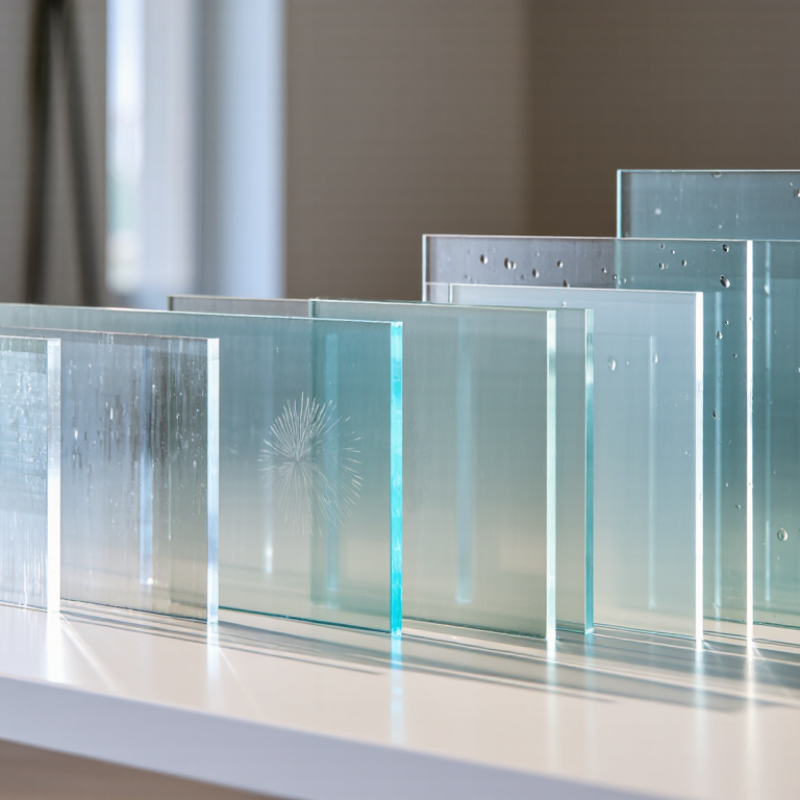
The seven main anti-glare glass types serve different global building needs. Acid-etched glass diffuses light through a smooth, satin surface. Sandblasted glass creates stronger diffusion but may collect dirt more easily. Patterned glass reduces direct reflections while adding privacy. Low-iron glass improves clarity, though it can still produce uncomfortable brightness.

Anti-reflective coated glass uses multilayer coatings to reduce surface reflection. Solar-control glass limits selected solar wavelengths and helps manage heat near large façades. Laminated anti-glare glass combines a diffusing interlayer with safety performance. These options are not equal. Coating durability, viewing angle, cleaning chemicals, humidity, and replacement access can change real performance. The International Energy Agency’s 2023 Global Status Report states that buildings consume about 30% of global final energy. Glare control should therefore support daylight use, not simply darken interiors.

Tips: Ask for visible light transmittance, exterior reflectance, haze, and glare-test results. Compare samples beside the intended lighting. A small sample can mislead. For offices, museums, and control rooms, request photometric data under both daylight and artificial lighting. Check compliance with relevant EN, ASTM, or ISO specifications. Also review edge quality and coating warranty terms. A visually beautiful panel may fail after installation. The compromise is real: stronger diffusion can reduce clarity, while very clear glass may leave screens uncomfortable.

7 Best Anti-Glare Glass Types for Global Buyers - The Seven Main Anti-Glare Glass Types for Global Buyers

No. Anti-Glare Glass Type Main Principle Typical Visible Light Transmittance Typical Haze Key Advantages Main Limitations Common Applications Important Buyer Considerations
1 Acid-Etched Matte Glass A controlled acidic treatment creates a uniform microscopic surface that diffuses reflected light. Approximately 85–92% Approximately 5–35%, depending on the finish Uniform appearance, smooth touch, easy cleaning, and good visual privacy. The etched surface can show fingerprints, and stronger matte finishes may reduce image clarity. Interior partitions, doors, shower screens, display covers, office glazing, and furniture. Confirm the required matte level, cleanability, edge treatment, thickness, and whether tempering or laminating is required.
2 Sandblasted Frosted Glass Fine abrasive particles roughen the surface and scatter incident light. Approximately 70–90% Approximately 15–60% Strong glare diffusion, customizable patterns, and suitability for decorative designs. The rough surface may retain dirt and fingerprints; unsealed finishes can be more difficult to maintain. Decorative panels, privacy glazing, signage, partitions, and architectural interiors. Ask whether a protective treatment is included and verify resistance to staining, moisture, and repeated cleaning.
3 Micro-Etched AG Glass A finely controlled etched texture disperses glare while preserving more image detail than a coarse matte surface. Approximately 88–94% Approximately 3–15% Good balance between glare control, transparency, touch comfort, and display readability. Performance depends heavily on texture uniformity and may require tighter quality control. Touchscreens, instrument panels, control interfaces, display windows, and electronic equipment. Request haze, gloss, clarity, surface roughness, abrasion, and fingerprint-resistance test data for the final thickness.
4 Patterned or Rolled-Texture Glass A patterned roller forms a permanent texture that diffuses light and obscures direct views. Approximately 70–90% Approximately 10–50%, depending on the pattern Durable texture, decorative appearance, privacy, and consistent large-area production. The pattern can reduce optical clarity and may not be suitable for high-resolution displays. Windows, doors, lighting covers, cabinet inserts, bathrooms, and architectural decoration. Check pattern direction, usable thickness, light transmission, cleaning requirements, and availability of safety processing.
5 Anti-Reflective Coated Glass A multilayer optical coating reduces surface reflection through interference effects rather than by scattering light. Approximately 95–99% Usually below 1% High clarity, low reflection, strong color neutrality, and excellent image visibility. Coatings may be sensitive to abrasion, chemicals, incorrect cleaning, or high-temperature processing. Optical instruments, museum cases, display covers, solar equipment, and premium architectural glazing. Specify reflection per surface, wavelength range, coating durability, cleaning method, and compatibility with tempering or lamination.
6 Laminated AG Glass Two or more glass sheets are bonded with an interlayer that can provide matte diffusion, safety retention, and sound reduction. Approximately 80–92% Approximately 5–30%, depending on the interlayer Improved safety, security, acoustic performance, UV filtering, and design flexibility. Heavier and usually more expensive; edges require proper sealing in humid or exposed environments. Skylights, façades, balustrades, vehicle glazing, security panels, and high-traffic interiors. Confirm interlayer type, total thickness, safety classification, edge protection, acoustic targets, and climatic suitability.
7 Tempered AG Glass A matte or micro-etched surface is combined with thermal tempering to improve mechanical and thermal safety performance. Approximately 85–94% Approximately 3–30%, depending on the surface treatment Higher resistance to thermal stress and impact than annealed glass; suitable for demanding installations. It cannot normally be cut or drilled after tempering, and optical distortion may occur if processing is poorly controlled. Commercial doors, shower enclosures, appliance panels, furniture, partitions, and equipment covers. Finalize all holes, cut-outs, edges, dimensions, and surface specifications before tempering; verify applicable safety standards.

Note: The optical ranges shown are typical purchasing guidelines rather than universal specifications. Actual values vary with glass thickness, surface finish, coating design, interlayer, lighting conditions, and test method.

Comparing Surface Treatments, Clarity, Durability, and Light Control

7 Best Anti-Glare Glass Types for Global Buyers

Anti-glare glass reduces reflected light through texture, coating, color, or layered construction. Acid-etched glass creates a uniform matte surface with soft, controlled reflections. Sandblasted glass diffuses stronger glare, but its roughness can collect dust and fingerprints. Ceramic-frit glass uses tiny patterns to block direct brightness. It works well on façades and skylights. Anti-reflective coated glass preserves the clearest image and highest daylight transmission. However, its coating needs careful cleaning. Tinted glass absorbs visible light and solar energy. It improves comfort, but darker tones can reduce interior clarity. Laminated glass with a diffusing interlayer adds safety and sound control. Laser-textured glass offers precise light scattering for specialized displays and interiors.

Clarity varies sharply between these options. Coated and laser-textured surfaces usually preserve sharper views than sandblasted finishes. Acid-etched glass gives privacy while keeping rooms visibly bright. Light control also depends on orientation, climate, and glazing thickness. A pale tint may suit northern offices, while stronger solar control helps exposed tropical elevations. Check visible light transmission, haze, reflection percentage, and solar heat gain together. One number never tells the whole story.

Durability requires practical testing. Exterior surfaces face rain, dust, salt, and repeated cleaning. Sandblasted finishes may weather unevenly. Some coatings can scratch when maintained with abrasive tools. I would request samples, cleaning instructions, and accelerated weather data before ordering. No option wins every test. Even a clear panel can feel harsh beside a bright screen or white wall.

Selecting Anti-Glare Glass for Different Applications and Climates

7 Best Anti-Glare Glass Types for Global Buyers

Selecting Anti-Glare Glass for Different Applications and Climates

Anti-glare glass is not a universal solution. The best choice depends on light intensity, humidity, temperature, and cleaning conditions. For office screens and indoor displays, chemically etched glass offers controlled reflection and a smooth viewing experience. Fine sandblasted glass works well for partitions and retail showcases, but its texture may collect dust. Coated glass can preserve clarity in museums, control rooms, and premium interiors. It needs careful handling.

Laminated diffusing glass is useful where safety and softer light matter, such as skylights and public interiors. Patterned glass can reduce sharp reflections on doors, cabinets, and decorative panels. Tinted glass helps in bright, sunny regions, especially near large windows. Low-reflection coated glass suits solar-facing façades and precision display areas. However, coating durability varies. Salt air, abrasive dust, and frequent washing can reduce performance.

Climate changes the selection. In coastal areas, specify materials that resist moisture and salt deposits. In desert regions, choose surfaces that tolerate dry dust and repeated cleaning. Cold climates require attention to thermal movement and edge sealing. I have seen attractive glass fail because installers ignored condensation. That mistake is easy to repeat. Samples should be tested under real lighting, including sunlight, LED glare, fingerprints, and viewing angles. A slightly less clear surface may perform better than a perfect-looking sample. Safety glazing and local building requirements must also be checked before production.

Global Purchasing Factors: Standards, Quality, Cost, and Supply Stability

7 Best Anti-Glare Glass Types for Global Buyers

Choosing anti-glare glass requires more than comparing surface appearance. Buyers should distinguish between diffuse-glare glass and anti-reflective glass. The seven practical options include acid-etched, sandblasted, matte-coated, low-iron anti-reflective, tinted, laminated, and chemically strengthened glass. Each type serves different conditions. Acid-etched glass offers consistent diffusion for displays and interior panels. Low-iron anti-reflective glass preserves brightness but usually costs more. Laminated glass adds safety value, while tinted glass may reduce glare but alter colors.

Global purchasing decisions should begin with destination-market standards and measurable test reports. Check haze, visible light transmission, reflection, surface hardness, impact performance, and color tolerance. Quality must remain stable across production batches. Request samples from different sheets, not only one approved piece. A beautiful sample can hide uneven coating thickness. This happens more often than buyers expect. Packaging also matters, especially during long sea transport and changing humidity. Confirm pallet design, edge protection, labeling, and replacement procedures before ordering.

Tips: Compare landed cost, not only unit price. Include tooling, inspection, freight, duties, breakage risk, and storage. Ask suppliers about raw-material sources and monthly capacity. A cheaper option may fail during peak seasons. Keep two qualified sources when supply continuity is critical. Still, dual sourcing can increase inspection work and reduce volume discounts. Allow realistic lead times, because urgent production often creates avoidable quality compromises.