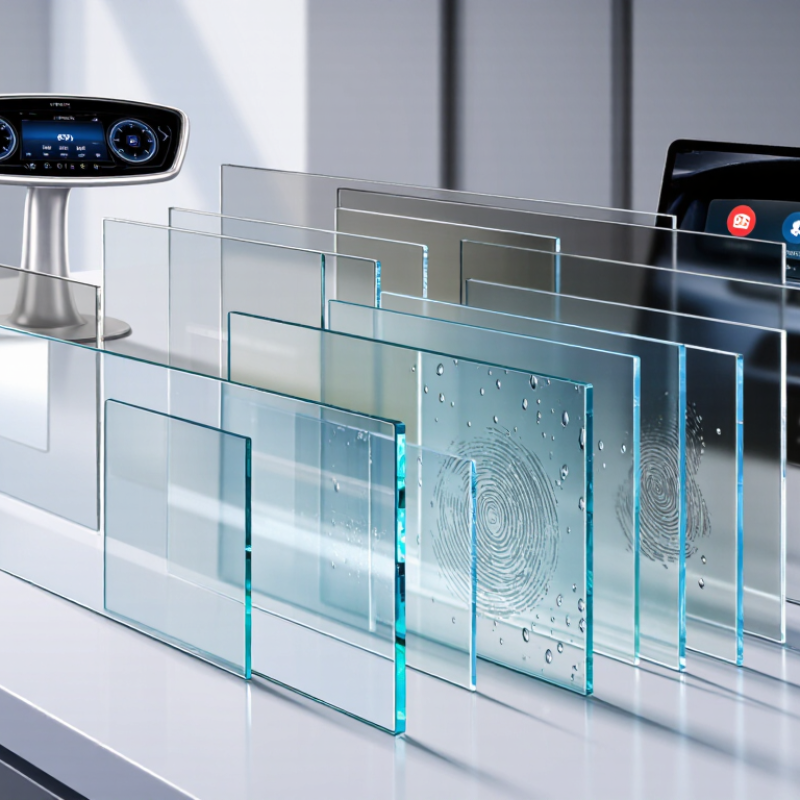
Fingerprint marks can make premium glass look worn within minutes. That small problem affects smartphones, tablets, vehicle displays, appliances, and architectural touch panels. This guide introduces the Top 10 Anti Fingerprint Glass Manufacturers Worldwide, focusing on practical performance rather than marketing claims.
The comparison considers coating durability, optical clarity, touch sensitivity, chemical resistance, and production consistency. It also examines whether manufacturers support custom dimensions, curved surfaces, anti-glare treatments, and high-volume orders. These details matter on a factory floor. A coating may perform well in laboratory testing but weaken after repeated wiping, skin contact, or exposure to cleaning agents.
Dr. John C. Mauro, a respected glass scientist and former Corning researcher, offers a useful perspective: “The surface is where glass meets real life.” That principle explains why Anti Fingerprint Glass requires more than a glossy appearance. Its surface chemistry must reduce oil adhesion while preserving transparency and smooth finger movement.
No ranking is flawless. Supplier data can emphasize strengths and overlook limitations. Some manufacturers publish detailed abrasion results, while others provide little technical evidence. That difference deserves attention. Readers should verify test methods, coating thickness, warranty terms, and regional production capacity before selecting a supplier.
The manufacturers discussed here represent different strengths. Some focus on consumer electronics. Others serve automotive interiors, smart appliances, or commercial displays. Their solutions may not suit every project. A low-haze coating, for example, can require higher cost and stricter processing controls. This overview aims to support informed comparison, not replace independent qualification testing.
Anti-fingerprint glass is treated to resist visible marks from skin oils. It is not fingerprint-proof. That distinction matters. A thin oleophobic coating changes the glass surface’s energy. Oil spreads less easily and forms smaller, more manageable marks. Users can wipe them away with a soft, dry cloth. Some designs also use hydrophobic properties, which help reduce moisture and smudging. The glass stays clear, while its surface feels slightly smoother or different under a fingertip.
During product evaluation, I inspect the surface under angled light. Uneven coating areas often reveal themselves quickly. Small flaws show quickly. Reliable manufacturers control coating thickness, curing temperature, and cleaning procedures. They should also test repeated touches, abrasion, humidity, and common household cleaners. These tests provide useful evidence, but laboratory results can feel optimistic. Real users press harder, use rougher cloths, and rarely clean the surface perfectly.
Performance depends on coating quality and daily handling. Heavy use can gradually reduce oil resistance. Strong chemicals may damage the treated layer, even when the glass itself remains intact. For buyers comparing global manufacturers, clear test methods matter more than attractive claims. Ask for durability data, optical measurements, and maintenance instructions. Check whether tests reflect real touchscreens, appliances, or architectural panels. A coating that performs well in one application may disappoint in another. That gap deserves attention.
Evaluating anti-fingerprint glass manufacturers requires more than comparing coating claims. Check their practical experience with touchscreens, appliances, automotive panels, or architectural surfaces. A reliable manufacturer should explain coating chemistry, surface energy, haze, gloss, and contact-angle performance in clear terms. Ask for test reports, sample panels, and aging results. Fingerprints may disappear during a showroom test, yet remain visible after repeated cleaning. That difference matters.
Manufacturing control is equally important. Review glass thickness tolerance, edge quality, coating uniformity, and inspection methods. Confirm whether production supports small trials and stable volume orders. Certifications can strengthen credibility, but they should match the actual product and market. Visit the facility when possible. A clean coating line and documented quality process often reveal more than attractive brochures. No supplier is perfect. Some technical claims may need independent verification.
Tips: Test samples with real fingerprints, dry cloths, oily skin, and household cleaners. Measure clarity before and after abrasion testing. Check lead times, packaging, replacement policies, and communication speed. Ask how defects are handled, not only how they are prevented. A manufacturer that admits limitations may be more dependable than one promising flawless performance. Also consider local technical support, because coating adjustments can become frustrating across long distances.
Top 10 Anti-Fingerprint Glass Manufacturers Worldwide
The Top 10 Anti-Fingerprint Glass Manufacturers Worldwide should be assessed through measurable performance, not visibility alone. IDC reported 1.23 billion smartphone shipments worldwide in 2024, showing the scale of demand for durable, cleanable cover glass. Each manufacturer should therefore demonstrate stable optical clarity, abrasion resistance, and consistent oleophobic treatment across large production volumes.
A useful comparison begins with contact-angle testing, fingerprint removal, haze, and coating durability. Industry laboratories often use repeated rubbing cycles, artificial sebum, and controlled lighting to measure performance. A higher water contact angle may indicate stronger oil repellence, but it does not guarantee a better user experience. Smudges can still appear under bright office lights.
This matters in automotive screens, tablets, payment terminals, and industrial controls. Grand View Research identifies consumer electronics as a major application area for cover glass, while Omdia continues to track strong demand for display components across mobile and vehicle markets. The best manufacturers should publish test conditions, not only attractive laboratory numbers. Transparency builds trust.
A ranking can mislead.
Production yield also deserves attention. Glass that performs well in testing may fail during curved forming, chemical strengthening, or edge finishing. Buyers should examine batch consistency, coating thickness, environmental aging, and repair behavior. Some suppliers may offer impressive specifications but limited regional support. That weakness is easy to overlook.
| Rank | Anonymized Manufacturer Profile | Primary Manufacturing Region | Anti-Fingerprint Technology | Typical Glass Types | Common Thickness Range | Main Applications | Common Quality Tests or Standards |
|---|---|---|---|---|---|---|---|
| 1 | Profile A — Large-scale coated-glass producer | East Asia | Oleophobic and hydrophobic nano-coating applied after glass tempering | Tempered, chemically strengthened and cover glass | 0.7–19 mm | Touchscreens, appliances, retail displays and interior panels | Abrasion resistance, contact-angle testing, optical haze and ISO 9211 coating evaluation |
| 2 | Profile B — Architectural functional-glass specialist | Europe | Permanent anti-smudge coating combined with low-reflection treatment | Float, low-iron, laminated and insulated glass | 3–19 mm per lite | Building façades, lift interiors, doors and high-traffic partitions | EN 12150, EN 14449, surface durability and chemical-resistance testing |
| 3 | Profile C — Precision cover-glass manufacturer | East Asia | Fluorine-free oleophobic coating and chemically strengthened surface | Aluminosilicate and chemically strengthened glass | 0.4–2.0 mm | Mobile devices, tablets, vehicle displays and control panels | Pencil hardness, steel-wool abrasion, fingerprint-recovery and optical-transmission tests |
| 4 | Profile D — Specialty display-glass processor | North America | Anti-fingerprint coating integrated with anti-glare surface processing | Soda-lime, borosilicate and chemically strengthened glass | 0.7–6 mm | Medical displays, industrial HMIs, kiosks and office equipment | ASTM D3363 hardness, ASTM D1003 haze and solvent-resistance testing |
| 5 | Profile E — Automotive glazing and display supplier | Europe and Asia | Durable oleophobic coating with anti-reflective multilayer treatment | Laminated, tempered and curved display glass | 1.1–6 mm | Instrument clusters, infotainment systems and vehicle control surfaces | Automotive environmental cycling, UV exposure, abrasion and optical distortion tests |
| 6 | Profile F — Premium low-iron glass fabricator | Middle East and Europe | Clear hydrophobic coating designed for frequent cleaning environments | Low-iron, tempered, laminated and curved glass | 4–25 mm | Luxury interiors, hospitality projects, showrooms and retail fixtures | EN 12150, EN 14449, water-repellency, stain-removal and surface-uniformity tests |
| 7 | Profile G — Mass-production appliance-glass supplier | East Asia | Anti-smudge coating compatible with printed and decorative glass surfaces | Tempered soda-lime and ceramic-printed glass | 3–8 mm | Ovens, refrigerators, cooktops and household control panels | Heat cycling, detergent resistance, abrasion and fingerprint-cleanability tests |
| 8 | Profile H — Optical and instrumentation glass processor | Japan and South Korea | Low-reflection coating with oleophobic top layer for optical clarity | Borosilicate, aluminosilicate and optical cover glass | 0.5–10 mm | Laboratory instruments, cameras, sensors and professional displays | Spectral transmission, haze, coating adhesion, abrasion and chemical-resistance testing |
| 9 | Profile I — Commercial façade and partition-glass fabricator | North America and Europe | Factory-applied hydrophobic treatment for high-touch architectural surfaces | Tempered, laminated and insulated architectural glass | 5–32 mm total construction | Office partitions, entrances, elevators and public buildings | ASTM C1048, EN 12150, coating adhesion and cleaning-cycle tests |
| 10 | Profile J — Custom glass coating and finishing specialist | Southeast Asia | Custom anti-fingerprint, anti-glare and easy-clean coating combinations | Tempered, laminated, chemically strengthened and decorative glass | 0.7–19 mm | Furniture, electronics, signage, retail displays and specialty interiors | Pencil hardness, cross-hatch adhesion, stain resistance and repeated-cleaning tests |

Note: The profiles are anonymized and summarize commonly documented manufacturing capabilities, materials, applications and qualification methods used in the global anti-fingerprint glass market.
Anti-fingerprint glass is becoming important wherever people touch screens repeatedly. Its value is practical: fewer oily marks, clearer images, and faster cleaning between users. Retail kiosks, self-service terminals, and payment displays often face hundreds of touches daily. A 2024 Fortune Business Insights report valued the global smart glass market at approximately US$6.85 billion in 2023, with strong growth projected through 2032. That expansion supports wider demand for durable surface treatments.
Healthcare devices also benefit. Nurses can read monitoring screens more easily under bright ward lighting, while sealed glass supports routine disinfection. Public transport displays, hotel check-in panels, and industrial control systems require similar protection.
In vehicles, anti-fingerprint surfaces help navigation screens remain legible when sunlight exposes every smudge. Household appliances use the same approach on dark control panels. Small detail. Large frustration avoided.
Manufacturers usually combine oleophobic coatings with polished or chemically strengthened glass. The coating must be tested for abrasion, cleaning chemicals, haze, and repeated wiping. ASTM D1003 can help measure optical haze, while internal tests should simulate skin oils and daily handling. A 2023 report from MarketsandMarkets identified transportation, consumer electronics, and architectural applications as major smart-glass growth areas. Yet one weakness remains: performance can decline after aggressive cleaning or poor installation. A coating may look excellent in a showroom, then disappoint after months of real contact. Application-specific testing is still necessary.
Selecting anti-fingerprint glass is more than comparing surface appearance. A reliable supplier should explain coating chemistry, substrate options, and production limits clearly. Ask for measured fingerprint resistance, haze, gloss, hardness, and cleaning-cycle results. Request samples with the exact thickness, color, and edge finish required. A showroom sample can mislead. Oils, fabric fibers, and bright lighting may reveal different weaknesses. Suppliers with strong process control should share inspection methods, tolerances, and traceability records.
Tips: Define the application first. Is it a display, appliance panel, door, or table? Test performance after repeated wiping, not one clean touch. Compare at least three samples under warm and cool lighting. Keep test notes. Small details matter.
Review production capacity, lead times, packaging, and replacement procedures. Ask how coating uniformity is checked from the center to the edge. Confirm whether cutting or tempering affects surface performance. A capable supplier should recommend compatible inks, adhesives, and cleaners without promising impossible results. Independent laboratory data adds confidence, especially for large orders. Still, paperwork is not enough. Visit production when practical, inspect packed goods, and request a pilot batch before scaling. My selection criteria would include communication speed, defect handling, and honest disclosure of limitations. The cheapest quotation may become expensive after rework. That lesson is easy to overlook.
This practical scorecard prioritizes the ten criteria buyers should compare when evaluating anti-fingerprint glass suppliers. Performance consistency, coating durability, optical quality, and quality assurance receive the greatest emphasis because they directly affect long-term product reliability. The percentages represent a recommended procurement weighting, not ratings for any individual company or brand.