inquiry
Leave Your Message

How to Choose Wall Washer Glass for Global Projects?

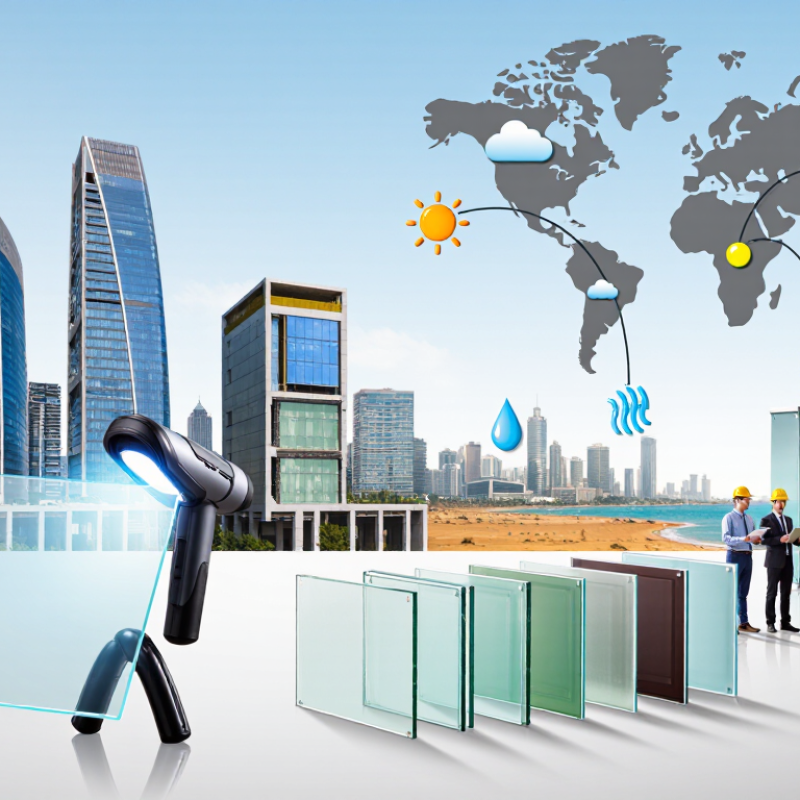
Choosing Wall Washer Glass for a global project is not merely an aesthetic decision. It affects light distribution, façade performance, safety, maintenance, and long-term operating costs. According to the International Energy Agency’s Buildings 2023 report, buildings consume about 30% of global final energy and create approximately 26% of energy-related emissions. Glass selection therefore deserves technical attention, not only visual approval.

A reliable evaluation starts with the project climate, wall assembly, LED temperature, viewing distance, and cleaning conditions. Confirm light transmission, diffusion, thermal performance, impact resistance, and color consistency. Tempered or laminated options may be necessary near public areas. The final choice should also match regional standards, fabrication capabilities, and replacement availability. One sample is not enough. Full-scale mock-ups reveal hot spots, visible LED dots, glare, and unexpected color shifts.

Lighting designer Randall Whitehead has said, “The quality of light is more important than the quantity of light.” That principle strongly applies to Wall Washer Glass. A bright surface can still feel harsh, uneven, or visually cheap. The U.S. Department of Energy’s Solid-State Lighting R&D Opportunities report also emphasizes improved efficacy, controllability, and visual quality in LED systems. These goals must be considered together.

Real projects are rarely perfect. A glass that performs beautifully in a showroom may fail under humid air, dust, salty wind, or intense sunlight. Designers should question supplier claims, request tested data, and review installation tolerances early. Sometimes, a slightly less dramatic finish delivers better uniformity and fewer maintenance problems. That compromise may be the wiser global specification.

How to Choose Wall Washer Glass for Global Projects?

Define Wall Washer Glass and Its Project Applications

How to Choose Wall Washer Glass for Global Projects?

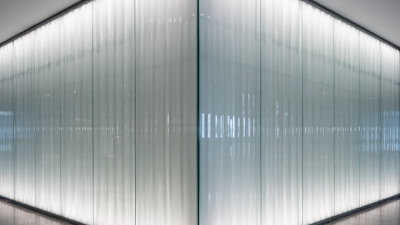
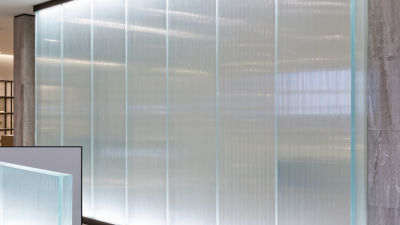
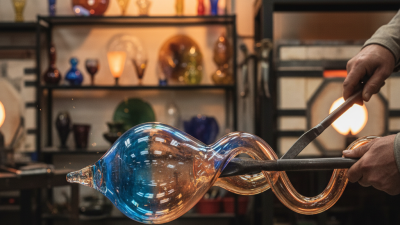
Wall washer glass is a textured, etched, or prismatic glass that spreads light across vertical surfaces. It reduces harsh highlights and creates a more even visual rhythm. Designers use it in retail interiors, museums, hotels, offices, and transit spaces. The final effect depends on texture depth, thickness, light angle, and the distance from the wall. A sample panel is essential. Digital renderings often look too perfect.

For global projects, choose glass according to safety, climate, and lighting performance. Laminated or heat-treated glass may be required for doors, partitions, and overhead areas. Confirm local standards before approval, including impact, thermal, fire, and acoustic requirements.

The International Energy Agency reports that buildings consume about 30% of global final energy. Therefore, daylight control matters, not only appearance. A suitable diffuser can soften glare while supporting useful daylight. However, excessive diffusion may reduce visual clarity and increase artificial lighting demand.

Application conditions also change the specification. In humid coastal areas, edge sealing and compatible framing deserve close attention. In cold climates, thermal breaks and condensation calculations are more important.

The 2023 UNEP Global Status Report states that buildings and construction contribute about 37% of global energy-related emissions. Glass selection cannot solve this alone. It must work with shading, sensors, and efficient luminaires.

I have found that the cheapest texture is rarely the easiest to coordinate. Small mistakes in mock-ups can become expensive on site. Test color, reflection, cleaning, and nighttime appearance before procurement.

Assess Light Distribution, Glare Control, and Optical Performance

How to Choose Wall Washer Glass for Global Projects?

Wall washer glass should shape light, not merely protect the LED source. Start with the distribution curve. A narrow beam can highlight columns, while a wider beam creates smoother vertical brightness. The U.S. Department of Energy’s 2023 SSL R&D Opportunities report cites laboratory LED packages exceeding 200 lumens per watt, yet finished luminaires lose output through glass, drivers, and thermal limits. Optical efficiency must be measured at fixture level.

Glare control needs equal attention. The CIE 117:1995 method calculates Unified Glare Rating, while office projects commonly reference UGR 19 or lower. That target is not universal. A museum, hotel lobby, and transport terminal need different visual comfort strategies. Frosted glass may soften bright points, but excessive diffusion can create a dull wall and waste light. Prismatic textures can improve control, although their performance changes with viewing angle.

Ask for LM-79 photometric reports, including beam angle, intensity curves, total luminous flux, and color data. IES LM-79 supports repeatable testing of complete solid-state lighting products. Check results at the intended mounting distance, not only in a laboratory sphere. Also review LM-80 data for LED lumen maintenance, then assess how heat and dust may affect the glass. Small installation errors matter. I have seen a visually elegant lens produce uneven vertical bands because the mounting height was ignored. That is worth challenging before global production.

Match Glass Types with Climate, Building, and Lighting Requirements

How to Choose Wall Washer Glass for Global Projects?

Match Glass Types with Climate, Building, and Lighting Requirements

Wall washer glass should be selected as part of the building envelope, not as a decorative afterthought. The climate sets the first technical limits. Hot façades need glass with strong solar control and resistance to thermal shock. Cold regions demand stable laminates, reliable seals, and space for movement. Coastal sites add salt, wind-driven rain, and frequent cleaning. A material that performs inland may age quickly beside the sea.

For public buildings, safety often outweighs maximum transparency. Laminated glass can retain fragments after breakage, while tempered glass offers strong impact and heat resistance. Choose according to location, human access, panel size, and local safety codes. Low-iron glass preserves neutral color in museums and premium interiors. Diffusing surfaces soften bright LED points and reduce harsh wall bands. Prismatic patterns can spread light, but they may create visible artifacts nearby.

Lighting goals must be measured on the wall, not guessed from a sample tile. Check beam angle, luminance, viewing distance, cleaning access, and night-time glare. On tall façades, small optical errors become obvious across many floors. Field reviews often reveal attractive mock-ups failing after installation. The glass may shift color temperature or create unexpected hotspots. A full-scale test under real weather and dimming conditions is wiser. One detail is often missed: replacement access.

Verify Safety Standards, Certifications, and Regional Regulations

Choosing wall washer glass for a global project requires more than checking light transmission or appearance. Safety documentation must come first. Confirm that the glass and complete fixture meet applicable electrical, thermal, impact, and fire safety requirements. Relevant standards may include IEC, EN, UL, or local equivalents, depending on the installation market. A familiar certificate is not automatically valid everywhere.

Request current test reports, certificates, material specifications, and factory quality records. Check the exact product model, glass thickness, temperature rating, and testing laboratory. Documents should match the supplied component, not a similar sample. For outdoor projects, verify ingress protection, UV resistance, moisture tolerance, and resistance to sudden temperature changes. Small details matter. A beautiful finish can fail under heat.

Regional regulations may also control energy performance, installation methods, recycling duties, and public-building approvals. Ask a qualified local consultant to review the specification before production. This step often prevents expensive redesigns. In one project review, the lighting performance was acceptable, but the glass had not been tested for the local impact requirement. That oversight changed the schedule. I would also recheck every document before shipment, because regulations and certificates can expire. Compliance is not a one-time checkbox.

How to Choose Wall Washer Glass for Global Projects? - Verify Safety Standards, Certifications, and Regional Regulations
Market / Region Glass Safety Standards Luminaire and Electrical Standards Typical Environmental Ratings Required or Common Compliance Documents Verification Points for Wall Washer Glass
European Union / EEA
  • EN 12150 for thermally toughened soda-lime silicate safety glass.
  • EN 14449 for laminated glass where retention after breakage is required.
  • EN 12600 impact classification may be requested for building glazing applications.
  • EN 60598-1 for general luminaire safety.
  • Relevant EN 60598-2 product-particular requirements according to the luminaire construction.
  • EN 62471 for photobiological safety assessment of lamps and lamp systems.
  • IP rating tested according to EN 60529.
  • IK impact rating tested according to EN 62262 when mechanical impact resistance is specified.
  • Outdoor projects commonly require an IP rating suitable for rain, dust, and cleaning conditions.
  • EU Declaration of Conformity for applicable product legislation.
  • Technical file, risk assessment, test reports, and product traceability records.
  • RoHS and REACH material information where applicable.
  • Confirm the glass classification, thickness, edge quality, and heat-soak or fragmentation requirements specified by the project.
  • Check compatibility with the luminaire temperature and thermal expansion range.
  • Confirm UV, moisture, salt-spray, and cleaning-chemical resistance for exterior installations.
United Kingdom
  • BS EN 12150 for thermally toughened safety glass.
  • BS EN 14449 for laminated glass.
  • BS EN 12600 may be used to specify pendulum-impact performance for safety glazing.
  • BS EN 60598-1 and the applicable BS EN 60598-2 section.
  • BS EN 62471 for photobiological safety where applicable.
  • Ingress protection according to BS EN 60529.
  • Mechanical impact protection according to BS EN 62262 when required by the specification.
  • UK Declaration of Conformity or other documentation required for the applicable Great Britain market legislation.
  • Technical documentation, test reports, and traceability records.
  • Check separately whether the project is in Great Britain or Northern Ireland because market-access rules differ.
  • Do not treat a CE document as automatically sufficient for every Great Britain project; confirm the current project and product route.
  • Verify impact classification, safe-breakage behavior, and the glass retention method.
United States
  • ANSI Z97.1 for safety glazing materials and related performance classifications.
  • 16 CFR 1201 applies to certain architectural glazing products and hazardous locations under U.S. federal requirements.
  • Tempered or laminated construction should be selected according to the installation hazard and local building code.
  • UL 1598 is commonly used for electric luminaires.
  • NEC requirements and the authority having jurisdiction determine installation acceptance.
  • Photobiological assessment may use IEC 62471 or an accepted equivalent, depending on the project specification.
  • NEMA enclosure type may be specified for the complete enclosure.
  • IP ratings according to IEC 60529 are also frequently stated for international projects.
  • Wet-location suitability must be confirmed for exposed outdoor installations.
  • Nationally recognized testing laboratory certification or field evaluation may be required for the complete luminaire.
  • Safety glazing marking and test documentation.
  • Installation instructions, electrical ratings, and wet-location or damp-location marking where applicable.
  • Verify whether the glass is part of a listed luminaire assembly or supplied as a separately evaluated component.
  • Confirm compliance with the applicable building code, safety glazing location rules, and local authority requirements.
  • Check thermal shock resistance for high-output LED and exterior applications.
Canada
  • CAN/CGSB-12.1 may be referenced for tempered or heat-strengthened glass requirements.
  • CAN/CGSB-12.2 may be referenced for laminated safety glass requirements.
  • Project specifications may also request ANSI or ASTM-based test evidence.
  • CSA C22.2 No. 250.0 is commonly used for electric luminaires.
  • Canadian Electrical Code requirements apply to electrical installations.
  • Local provincial or territorial authorities can impose additional approval requirements.
  • IP rating according to IEC 60529 may be specified.
  • Enclosure and weather-exposure requirements should be checked against the installation location.
  • Canadian certification mark or field evaluation for the complete electrical product, where required.
  • Safety glazing test reports, installation instructions, and product traceability.
  • Confirm acceptance by the relevant provincial or territorial authority.
  • Verify resistance to freeze-thaw cycles, road salt, de-icing chemicals, and thermal shock for exterior projects.
Australia and New Zealand
  • AS/NZS 2208 for safety glazing materials in buildings.
  • Glass selection should reflect human-impact risk, breakage behavior, and the glazing location.
  • AS/NZS 60598.1 for general luminaire requirements.
  • Relevant AS/NZS 60598.2 requirements for the luminaire type.
  • Electrical equipment must follow applicable national registration and installation rules.
  • IP classification according to AS/NZS 60529.
  • Outdoor luminaires should be assessed for rain, dust, condensation, and coastal exposure.
  • Regulatory Compliance Mark pathway where applicable.
  • Test reports, supplier declarations, wiring information, and installation instructions.
  • Evidence of compliance with local electrical safety and electromagnetic compatibility requirements.
  • Check compliance with local building-glazing provisions in addition to luminaire requirements.
  • Specify glass edge protection and drainage because water retention can accelerate seal and metal-component failure.
Gulf Cooperation Council Markets
  • IEC-based or locally adopted safety-glazing requirements may be specified by the project authority.
  • EN 12150, EN 14449, or equivalent test evidence is often requested for architectural glass components.
  • IEC 60598-1 and applicable IEC 60598-2 requirements are commonly used as the technical basis.
  • Local conformity and import requirements must be checked for the destination country.
  • IP65 or higher is frequently specified for exposed outdoor wall washers, but the correct rating depends on the installation design.
  • IK rating may be required in public, pedestrian, or vandal-prone areas.
  • Product conformity documentation accepted by the destination authority.
  • IEC test reports, inspection records, certificates of origin, and customs documentation where applicable.
  • Project-specific approvals from the consultant or authority having jurisdiction.
  • Prioritize solar heat, high ambient temperature, sand, dust, humidity, and salt-air resistance.
  • Verify the maximum operating temperature of seals, adhesives, gaskets, and glass coatings.
  • Request accelerated weathering or corrosion evidence for coastal installations.
International Project Baseline
  • Use a documented safety-glass specification: material type, thickness, impact class, fragmentation or retention behavior, and edge finish.
  • For overhead or public-area applications, laminated construction may provide post-breakage retention.
  • IEC 60598-1 provides a widely used baseline for luminaire safety.
  • IEC 60529 defines IP-code test classifications.
  • IEC 62262 defines IK-code impact classifications.
  • Choose IP and IK levels from the actual exposure, not from appearance alone.
  • Consider condensation, pressure-wash cleaning, impact, vibration, and thermal cycling.
  • Material certificates and batch traceability.
  • Glass safety test report and complete-luminaire test report.
  • Dimensional drawings, installation instructions, maintenance limits, and replacement-glass identification.
  • Confirm that the glass, gasket, frame, fasteners, LED system, and driver have been evaluated as a compatible assembly.
  • Require samples or mock-up testing when appearance, glare control, color transmission, or façade uniformity is critical.
  • Obtain written approval from the local consultant or authority before production.
Important: Standards and conformity routes vary by product type, installation location, and destination country. The applicable authority having jurisdiction, project consultant, and current edition of each standard should be confirmed before procurement. An IP or glass certificate alone does not prove compliance of the complete wall washer luminaire.

Compare Suppliers, Testing Data, Costs, and Installation Support

How to Choose Wall Washer Glass for Global Projects?

For global projects, compare suppliers beyond catalog images and basic quotations. Ask for production experience, material traceability, and documented quality controls. Request samples from the same glass batch used for mass production. A polished certificate is not enough. Check optical transmission, haze, color consistency, thermal shock resistance, UV exposure, and salt spray results. Testing should match the project’s climate and installation environment.

Compare total costs, not only the glass price. Include tooling, protective packaging, insurance, customs handling, replacement units, and delivery time. A low unit price can hide expensive breakage. Installation support also affects the budget. Reliable suppliers should provide shop drawings, fixing details, tolerance guidance, and cleaning instructions. Ask whether technical staff can review site photos or join remote coordination meetings. Small tolerances matter.

Tips: Create a comparison sheet with supplier history, test dates, sample results, landed cost, and support scope. Confirm whether tests cover the final thickness and surface treatment. I have seen teams approve beautiful samples, then discover color variation after installation. One detail was missed. Allow time for a pilot installation, especially when glass meets metal frames or outdoor lighting. Some estimates may still be imperfect, so record assumptions and review them before ordering.