Why Choose Colored Glass for Your Next Project?
Why Choose Colored Glass for Your Next Project?
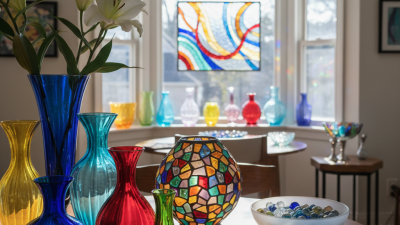
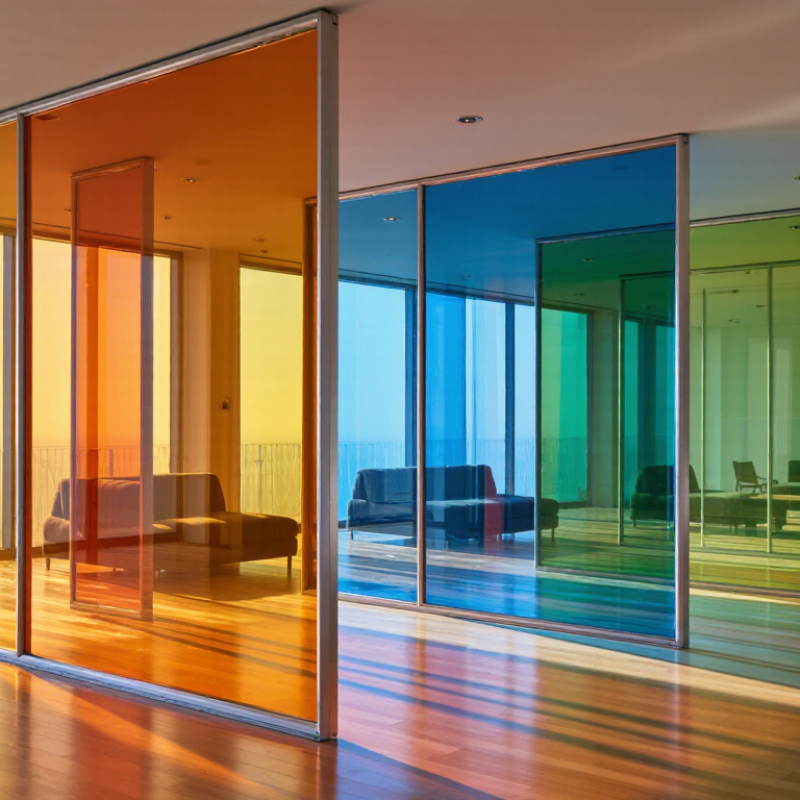
Colored Glass brings light, identity, and controlled atmosphere into architectural and interior spaces. Unlike painted surfaces, it carries color through the material itself. Sunlight can reveal changing tones across a wall, partition, cabinet door, or entrance panel. A deep amber sheet may feel warm in the morning, while blue glass can appear cooler under evening lighting. Small samples matter.
Renowned glass artist Dale Chihuly once said, “Glass is the most magical of all materials.” His observation reflects the material’s unusual balance of strength, transparency, texture, and movement. Modern Colored Glass can be produced through several methods, including colored coatings, laminated interlayers, and pigments integrated during manufacturing. Each option behaves differently. Professional fabricators should confirm shade consistency, edge appearance, thickness, and light transmission before production.
The strongest design decisions begin with real conditions. Review the glass beside flooring, metal finishes, and daylight samples. Check how fingerprints, reflections, and cleaning routines may affect the final result. A dramatic color can lose impact when used across an oversized surface. That is easy to overlook. Color matching also requires care because screens cannot reproduce glass accurately.
Colored Glass is not automatically the right choice for every project. It may increase cost, lead time, or maintenance requirements. Yet, when selected with technical guidance, it can create a durable visual feature rather than temporary decoration. The better question is not simply whether the glass looks beautiful. It is whether the color supports the room’s purpose, performance needs, and long-term character.
Colored Glass Defined: Composition, Colorants, and Light Transmission
Why Choose Colored Glass for Your Next Project?
Colored glass begins with a controlled blend of silica, alkali compounds, and stabilizers. Silica forms the rigid glass network. Alkali materials lower the melting temperature. Stabilizers improve chemical durability. Metal oxides create color within the molten mixture. Copper may produce blue or green tones. Cobalt often creates intense blue. Iron can shift glass toward green, amber, or smoky gray. The final shade depends on concentration, furnace conditions, and cooling history. This is why physical samples remain essential.
Light transmission is not simply about brightness. Colored glass absorbs selected wavelengths and allows others to pass through. Pale glass may soften daylight while preserving useful visibility. Dense glass can reduce glare and create deeper shadows. Transmittance changes with thickness, viewing angle, and surface texture. A color that looks balanced beside a window may feel heavy in a narrow corridor. Site reviews often reveal this difference. Digital screens cannot reproduce it reliably.
Choose glass for its performance, not appearance alone. It may support privacy, manage harsh sunlight, or define a quieter interior zone. Laminating and surface texturing can change both color and transmission. Ask for measured performance data and clear test conditions. Small batch variations can occur. Not always predictable. A design may still need adjustment after viewing a full-size panel in real daylight.
Optical Metrics: NFRC 200 Measures Visible Transmittance and Solar Heat Gain
Colored glass can shape daylight while controlling solar exposure. Its performance should be judged by measured optical metrics, not appearance alone.
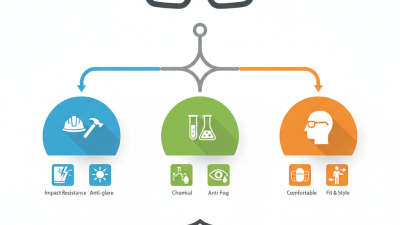
NFRC 200 evaluates visible transmittance (VT) and solar heat gain coefficient (SHGC). VT indicates how much visible light passes through the glass. Higher VT can support daylighting and reduce electric lighting demand. SHGC shows how much solar radiation enters as heat. Lower SHGC often benefits sun-exposed façades in warm climates. The U.S. Department of Energy reports that windows can cause 25–30% of residential heating and cooling energy use. That figure makes glass selection a practical energy decision, not merely a design preference.
A darker pane may feel cooler near a window. That impression can be misleading. Tinted glass may absorb solar energy, raising its temperature and affecting nearby surfaces. NFRC 200 results should be compared with orientation, frame design, shading, and local climate. The 2023 International Energy Agency buildings report also identifies cooling demand as a growing concern in warmer regions. Colored glass can help, but it is not a complete strategy. My own review point is simple: a low VT value may reduce glare, yet it can also create dim interiors and increase lighting use.
Tips: Request certified VT and SHGC data for the exact glass build-up. Check values at normal incidence and review seasonal sun angles. Test a full-size sample beside the intended interior finishes. A beautiful sample can perform differently in real weather.
Why Choose Colored Glass for Your Next Project? – Optical Metrics: NFRC 200 Measures Visible Transmittance and Solar Heat Gain
| Glass Type / Color |
Typical Visible Transmittance (VT) |
Typical Solar Heat Gain Coefficient (SHGC) |
Daylight Performance |
Solar-Control Benefit |
Common Design Applications |
| Clear glass reference |
0.80–0.90 |
0.75–0.85 |
Highest daylight transmission and a bright, neutral appearance. |
Limited solar control without additional shading or coatings. |
Daylighting, interior partitions, storefronts, and low-solar-exposure façades. |
| Green-tinted glass |
0.55–0.75 |
0.55–0.75 |
Moderate daylight with a soft green visual tone. |
Reduces solar gain compared with clear glass while retaining useful daylight. |
Office façades, educational buildings, mixed-use developments, and atriums. |
| Gray-tinted glass |
0.35–0.60 |
0.45–0.65 |
Balanced daylight with a neutral-to-cooler appearance and reduced glare potential. |
Provides moderate solar control and can reduce cooling loads in sun-exposed areas. |
Contemporary façades, curtain walls, offices, and residential glazing. |
| Bronze-tinted glass |
0.35–0.60 |
0.45–0.65 |
Moderate daylight with a warm appearance that can complement earth-toned materials. |
Can reduce transmitted solar radiation compared with clear glass. |
Warm-climate façades, hospitality projects, retail buildings, and renovations. |
| Dark gray or dark bronze glass |
0.20–0.40 |
0.30–0.55 |
Lower daylight transmission with stronger visual privacy and a bold exterior appearance. |
Greater solar reduction than lighter tints, subject to glass construction and orientation. |
Solar-exposed elevations, feature façades, privacy zones, and architectural accents. |
| Colored low-emissivity insulated glazing |
0.25–0.65 |
0.25–0.55 |
Color and coating selection determine the balance between daylight, reflectance, and interior appearance. |
Combines tint or color with insulating air spaces and a low-emissivity coating for stronger energy performance. |
High-performance façades, large glazed areas, commercial buildings, and projects targeting reduced cooling demand. |
Measurement note: NFRC 200 provides procedures for determining solar heat gain coefficient and visible transmittance. VT and SHGC are dimensionless values from 0 to 1; higher VT means more visible light transmission, while lower SHGC generally means less solar heat enters the building. The ranges above are representative design values for common glass configurations, not product-specific ratings. Actual results vary with glass thickness, coating, insulated-glazing construction, framing, and test conditions.
Safety Selection: ANSI Z97.1 and 16 CFR 1201 Impact Standards
Why Choose Colored Glass for Your Next Project?
Safety Selection: ANSI Z97.1 and 16 CFR 1201 Impact Standards
Colored glass can bring depth, privacy, and controlled daylight to an interior or exterior design. However, appearance should never lead the safety decision. A dark bronze panel may look substantial, but color does not prove impact resistance. The glass must be specified as safety glazing when people could contact it.
ANSI Z97.1 provides performance requirements for safety glazing materials, including impact testing and evaluation. In the United States, 16 CFR 1201 also establishes federal impact standards for architectural glazing. The applicable category can depend on the product size, location, and installation conditions. Always review the project’s building code and glazing schedule with a qualified professional.
Look for permanent safety markings, test documentation, and product information that identifies the glass type. Tempered and laminated glass can both support safer designs, but they behave differently after breakage. Tempered glass usually breaks into smaller fragments. Laminated glass can remain attached to an interlayer. Neither option fits every opening.
Site details matter. A colored panel beside a door, near a stair, or at floor level deserves careful review. Framing, edges, hardware, and installation quality can influence performance. I have learned that a beautiful sample can hide practical weaknesses. Certification helps, but it is not the whole answer. Ask questions before ordering, especially when custom coatings or unusual dimensions are involved.
Energy and Daylight: IEA Reports Buildings Use About 30% of Global Energy
Why Choose Colored Glass for Your Next Project?
Buildings consume about 30% of global energy, according to the International Energy Agency (IEA). This demand largely comes from heating, cooling, lighting, and ventilation. The IEA also reports that buildings produce about 26% of global energy-related emissions.
These figures make facade decisions operational, not merely visual.
Colored glass can filter intense sunlight before it enters occupied rooms.
That may reduce cooling loads and glare near windows. It can also preserve useful daylight, lowering dependence on electric lighting. Small decisions become measurable over decades.
The U.S. Department of Energy notes that daylighting works best when glare and solar heat are controlled. A blue, bronze, or neutral interlayer changes light quality, but performance depends on visible transmittance and solar heat gain coefficient. Specify both values, not color alone.
For a real project, compare energy models with hourly weather data, then test a full-size mock-up. It reveals reflections, dark corners, and uncomfortable hot spots that drawings often miss.
The IEA’s 2024 Buildings report emphasizes efficiency, electrification, and better building envelopes as connected priorities. Colored glass supports that approach when its optical data is verified.
It is not a magic shield.
Too much tint can increase lighting demand and weaken views. Attractive samples may disappoint beside bright paving. Recheck orientation, shading, climate, and occupant needs before approval.
The most sustainable pane may not be the darkest one, but the one matched carefully to its window.
Specification Guide: ASTM C1036, Thickness, Finish, and Application Fit
Why Choose Colored Glass for Your Next Project?
Colored glass can shape daylight, privacy, and visual identity without adding heavy wall finishes. However, color alone does not prove performance. ASTM C1036 helps define flat-glass type, quality, and thickness requirements. For tinted glass, confirm the selected category, visual quality, and allowable thickness variation before approval. Do not treat ASTM C1036 as a complete safety standard. Tempered and laminated products may also require ASTM C1048 or ASTM C1172, depending on the design and local code.
Thickness must match the application. Thin glass may suit protected interior partitions, while façades, doors, and exposed panels need stronger engineering review. Check wind load, panel size, edge conditions, thermal stress, and support details. The U.S. Department of Energy reports that windows can influence about 25% of residential heating and cooling energy use. The International Energy Agency reported that buildings consumed about 30% of global final energy in 2022. Solar heat gain and visible transmittance deserve equal attention. A darker finish may reduce glare, but it can also create hotter interior surfaces. That trade-off is easy to miss.
Tips
Request a physical sample beside the intended wall, flooring, and lighting. Compare it in morning and afternoon light. Specify surface finish clearly, including low-iron, reflective, satin, or textured options. Small samples can mislead. Recheck color after fabrication, because batch variation and viewing angle may change the result.


 Phone
Phone Send Email
 whatsapp
 Facebook