Global buyers need more than a low price when sourcing Toughened Glass. They need clear evidence of consistent processing, reliable dimensions, and careful packaging. A small flaw at an edge can matter once a pane is installed in a door, façade, or shower enclosure. Supplier comparisons should therefore look beyond catalog claims and examine product range, quality controls, lead times, export experience, and after-sales support.
A useful principle for this review is: “A glass specification is only as dependable as the process and checks behind it.” This is an editorial summary, not a verified quotation from a named industry expert. To keep the ranking trustworthy, buyers should confirm each supplier’s certifications, test documentation, production capacity, and references directly. Ask for samples where practical. Check how corners are protected and whether packing suits the shipping route. These details are easy to overlook.
The Top 10 Toughened Glass Suppliers for Global Buyers aims to make those comparisons more practical. It considers manufacturers’ capabilities, communication, customization, and suitability for international orders, rather than treating every supplier as interchangeable. Still, no list can replace project-specific due diligence. Product performance depends on the application, the specification, and correct installation. A polished brochure is not proof. Verify the details before committing.
Toughened glass, also called fully tempered glass, is ordinary float glass strengthened through controlled heating and rapid cooling. The sheet is cut, drilled, and edge-finished before tempering; afterward, those changes may cause breakage. That order matters. A furnace heats the glass close to its softening range, then powerful air jets cool both faces. The outer layers contract first, leaving the surface in compression and the core in tension. This stress pattern helps the glass resist impact and thermal changes better than untreated glass.
The figures need context. ASTM C1048-22 specifies at least 69 MPa of surface compression for fully tempered flat glass. That is a measurable quality criterion, not a guarantee against failure. If the glass breaks, it typically separates into many smaller pieces, but those pieces can still cause injury. Buyers should request test records for the actual thickness, dimensions, and processing batch—not just a general product sheet. Check edges closely, too: small chips can become failure points. One practical caution: tempering does not correct poor design or installation. The details are easy to miss.
Toughened (fully tempered) glass is heated and rapidly cooled to create surface compression, increasing its strength compared with ordinary annealed glass.
The chart shows minimum surface-compression benchmarks: heat-strengthened glass typically ranges from 24 to 52 MPa, while fully tempered glass requires at least 69 MPa. Benchmarks are based on ASTM C1048.
Choosing a toughened glass supplier requires more than comparing prices and catalogue thicknesses. Ask for recent test reports that identify the tested product, thickness, and applicable standard. Confirm how the supplier controls furnace temperatures, cutting, edge grinding, and hole placement. Small errors around a drilled hole can matter once glass is installed.
Ask for evidence. Review sample pieces under consistent lighting, checking for edge chips, roller marks, and visible distortion. A polished sample can still hide variation between production batches, so request inspection records and traceability details. Clarify how rejected panels are handled and whether packaging protects corners during long-distance transport. Photographs help, but they cannot replace documented checks.
Capacity and communication deserve equal attention. Ask for typical lead times, monthly output, and how urgent changes affect production. Compare these answers with a trial order or factory audit when practical. Suppliers should explain testing limits plainly, rather than promising that every panel will be flawless. One detail is easy to overlook: confirm who pays for replacement glass if damage appears after delivery, and record that agreement in writing.
For global buyers, supplier selection is less about a polished catalogue than consistent heat treatment, edge quality, and dependable packing. The United Nations Environment Programme’s 2022 Global Status Report says buildings and construction produced 37% of global energy- and process-related carbon emissions in 2021. The U.S. Department of Energy estimates windows can account for 25–30% of household heating and cooling energy use. Glass specifications therefore affect both building performance and replacement costs.
Ten supplier profiles help clarify the field. A façade processor handles curtain-wall panels. An automotive specialist focuses on tight dimensional tolerances. A safety-glass fabricator serves doors and partitions. An oversized-panel maker manages heavy lifts. A curved-glass processor shapes radiused pieces. An insulated-unit integrator combines glazing layers. A solar-control specialist coordinates coatings and tempering. A regional custom shop suits short runs. A high-volume producer targets repeat orders. An export-focused supplier plans crates, lead times, and documentation.
Ask each candidate for heat-soak options, bow and roller-wave tolerances, breakage rates, and recent test records. Request a sample, then inspect its edges under raking light; small chips can matter. Check whether packing protects corners through transshipment, not just factory loading. Supplier claims are not interchangeable. Compare like-for-like specifications, and verify figures against the project’s requirements. Some buyers overlook replacement logistics. That is worth reconsidering.
| Profile | Supplier type / typical market | Common toughened-glass products | Typical applications | Buyer checks |
|---|---|---|---|---|
| 01 | High-volume architectural processor serving export markets | Flat clear, tinted, and heat-treatable coated glass; monolithic and laminated assemblies | Curtain walls, façades, doors, and commercial interiors | Confirm maximum processing size, edgework tolerances, heat-treatment records, and packaging method |
| 02 | Custom fabricator focused on building projects | Cut-to-size tempered panels with holes, notches, polished edges, and ceramic frit options | Shopfronts, partitions, balustrades, and canopies | Submit final dimensions and drawings before tempering; post-tempering cutting or drilling is not permitted for ordinary tempered glass |
| 03 | Safety-glazing specialist for residential and commercial markets | Fully tempered safety glass and laminated safety-glass makeups | Shower enclosures, doors, sidelights, and protective glazing | Check the applicable impact-safety standard and product markings for the destination market |
| 04 | Insulating-glass-unit (IGU) fabricator with in-house heat treatment | Tempered panes assembled into double- or triple-glazed units | Windows, façades, and energy-efficient building envelopes | Request glass build-up, spacer and sealant details, unit tolerances, and relevant IGU performance documentation |
| 05 | Automotive and transport-glass processor | Curved or flat tempered glass; laminated glass may be offered for applications where required | Vehicle side and rear glazing, buses, rail, and specialist vehicles | Verify vehicle-specific approvals, optical quality, curvature, and traceability requirements |
| 06 | Interior and furniture-glass fabricator | Clear, low-iron, tinted, patterned, and digitally printed tempered panels | Tabletops, shelves, cabinetry, partitions, and decorative panels | Confirm exposed-edge finish, color consistency, print compatibility, and safe handling requirements |
| 07 | Solar-glass and specialty-glass processor | Thin patterned or low-iron tempered glass, depending on the product and production line | Solar modules, collectors, and technical equipment | Request thickness and dimensional tolerances, surface quality criteria, and application-specific test results |
| 08 | Regional processor supplying multiple construction markets | Standard-size and project-cut tempered glass; laminated or IGU products may also be available | Local commercial and residential construction | Check delivery coverage, lead times, local code compliance, and replacement-order support |
| 09 | Precision fabricator for complex shapes and engineered projects | Processed panels with shaped edges, cut-outs, and project-specific dimensions | Specialty façades, architectural features, and equipment enclosures | Review drawing-control procedures, sample approval process, and dimensional inspection records |
| 10 | Full-service glass processor coordinating fabrication and export logistics | Tempered glass supplied as monolithic panels, laminated products, or components for IGUs | Multi-site construction projects and international procurement programs | Confirm export packaging, shipping terms, document set, breakage policy, and production-slot commitments |

A useful comparison of toughened-glass suppliers looks beyond catalogue size. Buyers should check furnace capacity, maximum panel dimensions, thickness range, edge finishing, and documented quality controls. Ask how each supplier verifies tempering and handles breakage during packing. Small details matter: a chipped corner can delay installation, even when the glass meets its stated specification.
UNEP and the Global Alliance for Buildings and Construction reported that buildings and construction accounted for 37% of global energy- and process-related carbon emissions in 2022. That figure makes glazing performance relevant, but it does not prove one supplier is better. Compare test documentation, coating options, and consistency between sample panels and production batches. Regional coverage also affects lead times and replacement orders. A nearby processing site or warehouse can reduce transit distance, while export experience helps with protective crates and shipment coordination.
Coverage claims need scrutiny. Confirm which services are performed locally and which are outsourced, then ask for realistic delivery windows to the project site. Check whether technical support can review drawings before production. The ranking can mislead. A supplier with broad reach may still lack the right furnace size or local service capacity, and public data rarely makes those differences easy to verify.
Sourcing toughened glass across borders takes more than comparing unit prices. Start with the actual application: a shower screen, façade panel, or appliance door may require different thicknesses, edge finishes, and hole positions. Send suppliers dimensioned drawings and clarify acceptable tolerances. Small measurement differences can complicate installation.
Ask how each supplier controls heating, quenching, and inspection. Request recent test documentation for the proposed glass specification, not a generic product sheet. Confirm whether cut-outs, polished edges, or coatings are completed before tempering, since later changes may not be possible. Samples help, but they cannot reveal every production variation. That matters.
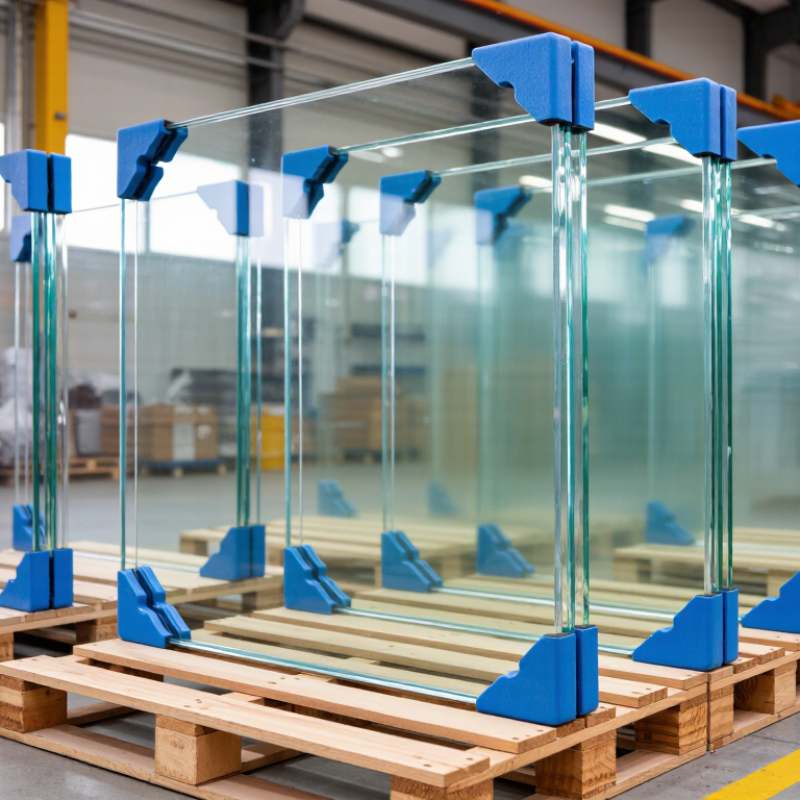
Packaging and delivery deserve equal attention. Check how panels are separated, corner-protected, and secured for the chosen transport route. Agree on packing photos, shipment milestones, and what happens if glass arrives damaged. A low quotation can become costly after breakage, storage, or rework.
Compare suppliers using the same drawing, quantity, packaging plan, and delivery terms. Ask about minimum order quantities, production capacity, and realistic lead times during busy periods. Verify that certificates match the supplied product and the requirements of your destination market. Keep written approvals for color, clarity, edgework, and labeling. Even with careful checks, international sourcing can bring delays; leave room in the schedule.