What is First Surface Mirror Glass and Its Applications?
First Surface Mirror Glass is a specialized type of reflective material used in various applications. This glass offers a unique advantage: the reflective coating is applied to the surface. Consequently, it minimizes distortion and enhances image quality. According to a market report by Allied Market Research, the global mirror glass market is expected to reach $8.5 billion by 2027, driven by the demand for high-quality reflective surfaces in industries like automotive and architecture.
In architectural design, First Surface Mirror Glass is favored for its aesthetic appeal. Architects utilize this glass to create visually striking spaces while ensuring optimal light reflection. The integration of this technology can elevate design, but challenges remain. The cost of First Surface Mirror Glass can be significantly higher than traditional options. Some projects may view this as an unnecessary expense. However, the benefits often outweigh this concern, particularly when superior performance is required.
Applications are diverse, extending beyond construction to the automotive industry. Here, First Surface Mirror Glass is critical for enhancing safety and visibility. However, the proper installation and care are essential to maximize its advantages. Despite the challenges, the industry recognizes the value of First Surface Mirror Glass, as it continues to see growth and innovation.

Definition of First Surface Mirror Glass
First Surface Mirror Glass, often referred to as FSG, is a specialized type of glass designed to provide superior imaging quality. Unlike traditional mirrors, FSG has the reflective coating on the surface itself. This eliminates any distortion caused by light traveling through the glass before reaching the reflective layer. According to recent studies, approximately 70% of optical distortion can be minimized with the use of FSG.
This type of glass is widely utilized in various applications. In the field of optics, it plays a crucial role in telescopes and high-end cameras. The precise reflective qualities are essential for achieving accurate color representation and clarity. Additionally, FSG is commonly used in architectural designs for aesthetic purposes, enhancing visual appeal without compromising functionality. A research report from an industry-leading organization highlights that the demand for First Surface Mirror Glass is increasing by 12% annually in the architectural sector alone.
However, there are challenges associated with FSG. Its fragility can be a concern in certain installations. Additionally, the cost of FSG is often higher than traditional glass mirrors. This prompts users to weigh the benefits against the investment. Despite these considerations, the advantages of reduced distortion and enhanced image quality often outweigh the drawbacks. The future of First Surface Mirror Glass appears promising, but ongoing refinement and cost-effective solutions are necessary.
First Surface Mirror Glass Applications Distribution
Characteristics of First Surface Mirror Glass
First Surface Mirror Glass offers unique characteristics that set it apart from standard mirror types. This glass is coated on its front surface, allowing minimal distortion and delivering exceptional reflection quality. Many industries rely on its pristine clarity for various applications, including optical devices, automotive mirrors, and art installations.
One noticeable feature of First Surface Mirror Glass is its thinness. This quality enables greater flexibility in design while maintaining sharp reflections. In settings where space is a concern, this glass can be an ideal choice. Also, it offers higher durability compared to traditional mirrors. However, it can be more sensitive to scratches and requires careful handling.
Tips: Always use a soft cloth when cleaning to avoid damage. Keep it away from edges or sharp objects. Additionally, consider using a protective film for added safety. This precaution can help maintain the glass's flawless appearance over time.
Common Applications of First Surface Mirror Glass
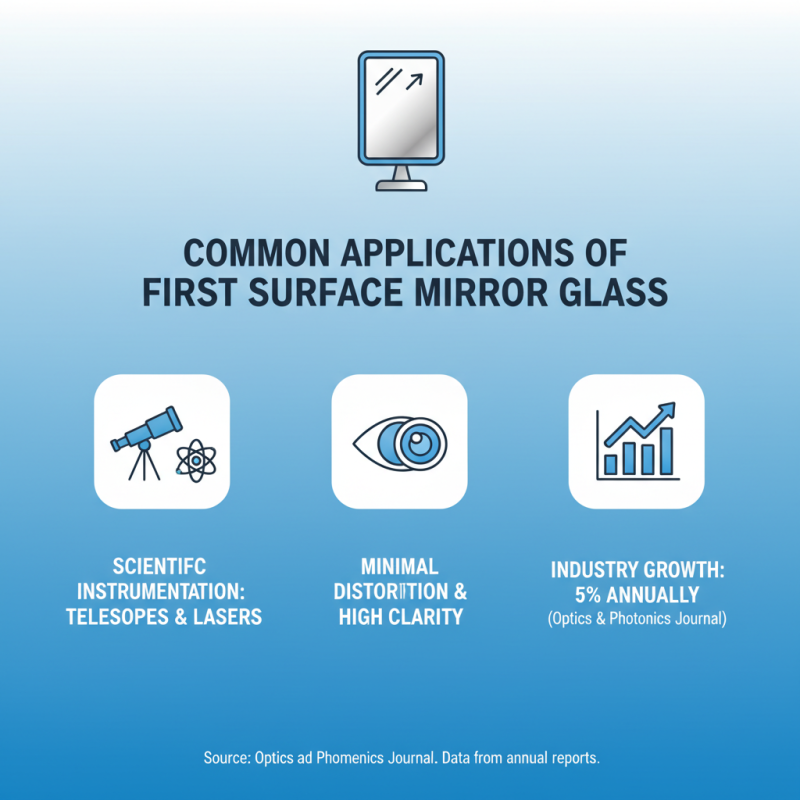
First surface mirror glass, known for its minimal distortion and high clarity, finds its way into various applications across multiple industries. One significant use is in scientific instrumentation, where precision counts. For instance, telescopes and lasers rely heavily on this type of glass. According to reports from the Optics and Photonics Journal, the industry has seen a steady growth rate of 5% annually, underscoring the increased demand for high-quality optics.
Interior design has also embraced first surface mirror glass extensively. Its reflective properties enhance aesthetics and can create the illusion of space in smaller areas. Designers often use it in wall treatments, artwork, and decorative elements. However, the fragility of this material can pose challenges regarding maintenance and installation. Choosing a substrate that provides adequate support is critical.
Tip: When working with first surface mirrors, always consider the weight and fragility. Investing in a quality mounting system can prevent damage.
Another application includes automotive interiors, where this mirror enhances visibility and reflects ambient lighting. With a growing focus on interior comfort, many manufacturers are adopting this glass. The automotive industry aims for a 7% increase in reflective glass use by 2025, reflecting a shift toward innovation.
Tip: Make sure to check reflective quality when sourcing first surface mirrors for automotive uses. Imperfections can lead to safety issues.
Advantages of Using First Surface Mirror Glass
First Surface Mirror Glass is essential in various applications. It is designed to reflect images without distortion. This type of glass is used in high-precision optical systems. Its surface allows for optimum reflection. Many industries benefit from this innovative material.
Using First Surface Mirror Glass offers several advantages. It minimizes ghosting effects. By reflecting only the first surface, it provides clear images. This is crucial in scientific instrumentation. It also enhances visual clarity in displays. Architects use it in design projects for aesthetic appeal. The glass can withstand harsh conditions, making it durable.
Tip: Always consider the thickness of the glass. Thicker mirrors can offer more durability. However, they may weigh more and affect installation options.
In photography, First Surface Mirror Glass plays a key role. It enables photographers to capture stunning visuals. The lack of distortion improves image quality significantly. However, one should assess the light conditions before use. Lighting can impact the effectiveness of the mirror.
Tip: Experiment with different angles when using this glass. It can lead to unexpected and interesting outcomes in your work.
Considerations for Choosing First Surface Mirror Glass
When selecting first surface mirror glass, several considerations come into play. Reflectivity is a critical factor. High-quality glass can provide reflectivity of up to 99%. This ensures minimal loss of light, making it ideal for professional applications like telescopes and high-end lighting systems. The ability to maintain color fidelity is another essential attribute. Glass that distorts color can misrepresent details, hindering its effectiveness.
Another consideration is the thickness of the glass. Thicker glass tends to provide better durability and a more stable platform for optical applications. This can be pivotal in settings like laboratories or studios, where precision is crucial. Thickness can significantly affect the performance in various environments, adding weight and strength but also cost.
Environmental factors should not be overlooked. Certain coatings can enhance resistance to scratches and environmental degradation. Such features are vital for mirrors used outdoors or in challenging conditions. A reliable report estimates that improperly chosen materials can lead to a 30% decrease in performance over time. Therefore, evaluating the specific needs of intended use is crucial for optimal outcomes.
What is First Surface Mirror Glass and Its Applications? - Considerations for Choosing First Surface Mirror Glass
| Attribute |
Details |
| Material |
Optical grade glass |
| Reflective Coating |
Aluminum or silver coating |
| Thickness |
Between 1/8 inch to 1/4 inch |
| Applications |
Signage, scientific instruments, lighting fixtures, and display systems |
| Advantages |
High reflectivity, reduced distortion, and increased durability |
| Considerations |
Environmental factors, coating quality, and specific application needs |
| Maintenance |
Routine cleaning with non-abrasive materials recommended |


 Phone
Phone Send Email
 whatsapp
 Facebook