What is Cover Glass For Kiosk and How To Choose It?
Choosing the right cover glass for kiosks is crucial in today's tech-driven world. Experts in the industry emphasize its importance. David Lee, a recognized authority on kiosk design, once stated, “The quality of cover glass can make or break user experience.” This emphasizes how significant this element is.
Cover glass for kiosks serves multiple purposes. It protects screens from scratches and vandalism. High-quality glass enhances visibility and touch sensitivity, ensuring smooth interactions. These factors contribute to overall customer satisfaction, especially in high-traffic locations like airports and malls.
However, selecting the perfect cover glass can be challenging. Not all products offer the same durability or clarity. It requires in-depth research and consideration of various materials. Some options may appear appealing but fail under harsh conditions. Reflecting on these choices is vital for making informed decisions. A thoughtful approach can lead to better investments in kiosk technology.

Understanding Cover Glass: Definition and Purpose in Kiosks
Cover glass is an essential component for kiosks. It provides protection and enhances functionality. The primary purpose is to shield screens from physical damage, dust, and moisture. According to industry reports, nearly 60% of all kiosk failures result from hardware damage. This highlights the importance of durable and reliable cover glass in enhancing the lifespan of kiosks.
Selecting the right cover glass can be challenging. Factors like thickness, coating, and clarity must be considered. Research shows that tempered glass offers greater resistance to breakage, making it a popular choice. Optically clear coatings can minimize glare, improving visibility in bright locations. It’s crucial to balance aesthetics with functionality when choosing the right option.
Tips: Always check the scratch resistance rating. A rating of 9H is ideal for high-traffic areas. Consider anti-fingerprint coatings to maintain a clean look. Testing different samples in real-world conditions is advisable. Make decisions based on how the glass performs under various environments, rather than just specifications. This practical approach will lead to better outcomes.
Types of Cover Glass Materials: Pros and Cons for Kiosk Applications
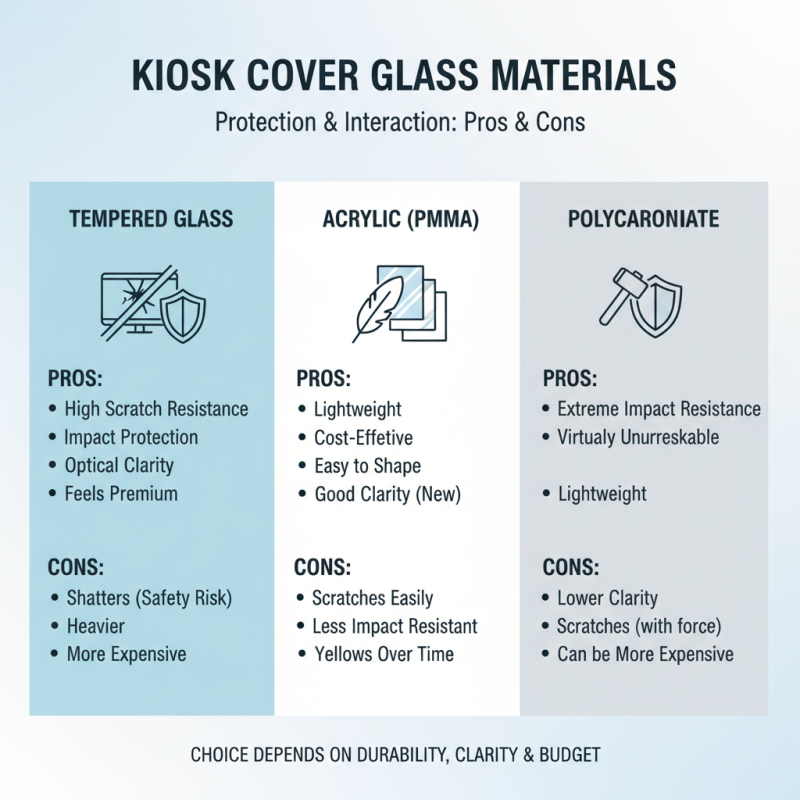
Cover glass for kiosks is essential for protecting screens and enhancing user interaction. Various types of cover glass materials serve different purposes. Common choices include tempered glass, acrylic, and polycarbonate. Each material has unique qualities that can impact durability and clarity.
Tempered glass is robust and scratch-resistant. It provides excellent visual clarity, making it ideal for high-traffic areas. However, it can be heavy and more expensive. Acrylic offers lightweight and shatter-resistant benefits, but it may scratch easily and yellow over time. Polycarbonate is incredibly tough and impact-resistant, making it suitable for environments prone to vandalism. Yet, it might lack the optical clarity that tempered glass boasts.
Tips for selecting cover glass include considering the kiosk's environment. For outdoor use, invest in UV-protective options. For high engagement kiosks, prioritize materials with anti-glare coatings. Regular maintenance can also prolong the lifespan of the glass. Reflect on the balance between cost and durability for your specific needs.
Key Factors to Consider When Choosing Cover Glass for Kiosks
When selecting cover glass for kiosks, there are several key factors to consider.
The thickness of the glass plays a crucial role in its durability. A thicker glass may resist shattering better than a thinner option. However, it can add weight to your kiosk.
Balance is important here, as you want safety without compromising functionality.
Another significant factor is the anti-glare and anti-reflective properties of the glass. These features improve visibility in various lighting conditions. Visitors often struggle to see screens with glare. A good cover glass enhances user interaction and satisfaction. Yet, sometimes these coatings can wear over time, leading to potential issues.
Temperature resistance is also vital. Kiosks in outdoor settings face different weather conditions. Cover glass must endure heat and cold without warping.
Testing these materials under varying climates can provide insights into their performance.
Budget constraints often limit choices, yet investing in quality materials can pay off in the long run.
Choosing the right cover glass requires thoughtful consideration and a willingness to weigh options carefully.
The Importance of Durability and Scratch Resistance in Cover Glass
In kiosk design, the choice of cover glass is crucial. Durability and scratch resistance play a vital role in the long-term performance of these devices. Users interact with kiosks frequently, often under various environmental conditions. This interaction can lead to scratches and damage. Choosing durable cover glass enhances both functionality and aesthetic appeal.
Scratch resistance is essential for maintaining clarity and usability. A scratched surface can distort images and text, frustrating users. It’s important to consider materials designed to withstand wear and tear. Some coatings can enhance scratch resistance significantly, giving peace of mind in high-traffic areas. Not all cover glass provides the same level of protection, so research is needed.
It's worth noting that while durability is paramount, other factors may come into play. Weight, thickness, and cost should also be evaluated. Some thick glass can be heavy and fragile, which poses installation challenges. Ultimately, balancing these elements will lead to a more effective and user-friendly kiosk design. Thoughtful selection can prevent future headaches and ensure the kiosk serves its purpose effectively over time.
What is Cover Glass For Kiosk and How To Choose It? - The Importance of Durability and Scratch Resistance in Cover Glass
| Property |
Description |
Importance |
| Material Type |
Common types include tempered glass and acrylic. |
Determines overall strength and resistance to impacts. |
| Thickness |
Usually ranges from 3mm to 10mm. |
Thicker glass offers higher durability and protection. |
| Scratch Resistance |
Measured by HC rating, higher rating means better resistance. |
Essential to ensure display clarity and longevity. |
| Anti-Glare Coating |
Reduces reflections and enhances visibility. |
Improves user interaction and accessibility in bright environments. |
| Temperature Resistance |
Ability to withstand extreme temperatures. |
Important for outdoor kiosks exposed to weather conditions. |
Installation and Maintenance Tips for Kiosk Cover Glass
Choosing the right cover glass for your kiosk is crucial for durability and functionality. Installation plays a key role in ensuring longevity and minimizing maintenance needs. An estimated 40% of kiosk downtime is due to improper installation, leading to costly repairs and lost revenue. It’s advised to follow manufacturer guidelines closely during setup. This includes using appropriate materials for frame support and ensuring correct sealant applications to prevent moisture intrusion.
Regular maintenance is essential for the kiosk cover glass. A study revealed that kiosks with scheduled upkeep last 30% longer than those without. Cleaning the glass with non-abrasive agents preserves its clarity. Inspect for scratches or cracks regularly; small damages can worsen if ignored. Employing a professional service for deep cleaning can help preserve the integrity of the surface, ensuring enhanced user interaction.
Environmental factors also play a role in the maintenance of kiosk glass. UV exposure can cause discoloration, while extreme temperatures may lead to frame expansion or contraction. Specific coatings can mitigate these risks but may require reapplication over time. Pay attention to seasonal changes and adjust maintenance routines accordingly. Addressing these practical details not only extends the life of the kiosk but also supports consistent user engagement.
Cover Glass Thickness Preference for Kiosks
This bar chart represents the thickness preference for cover glass used in kiosks. The most preferred thickness is 4mm, followed by 5mm, indicating that thicker glass is favored for durability and protection in kiosk applications.


 Phone
Phone Send Email
 whatsapp
 Facebook